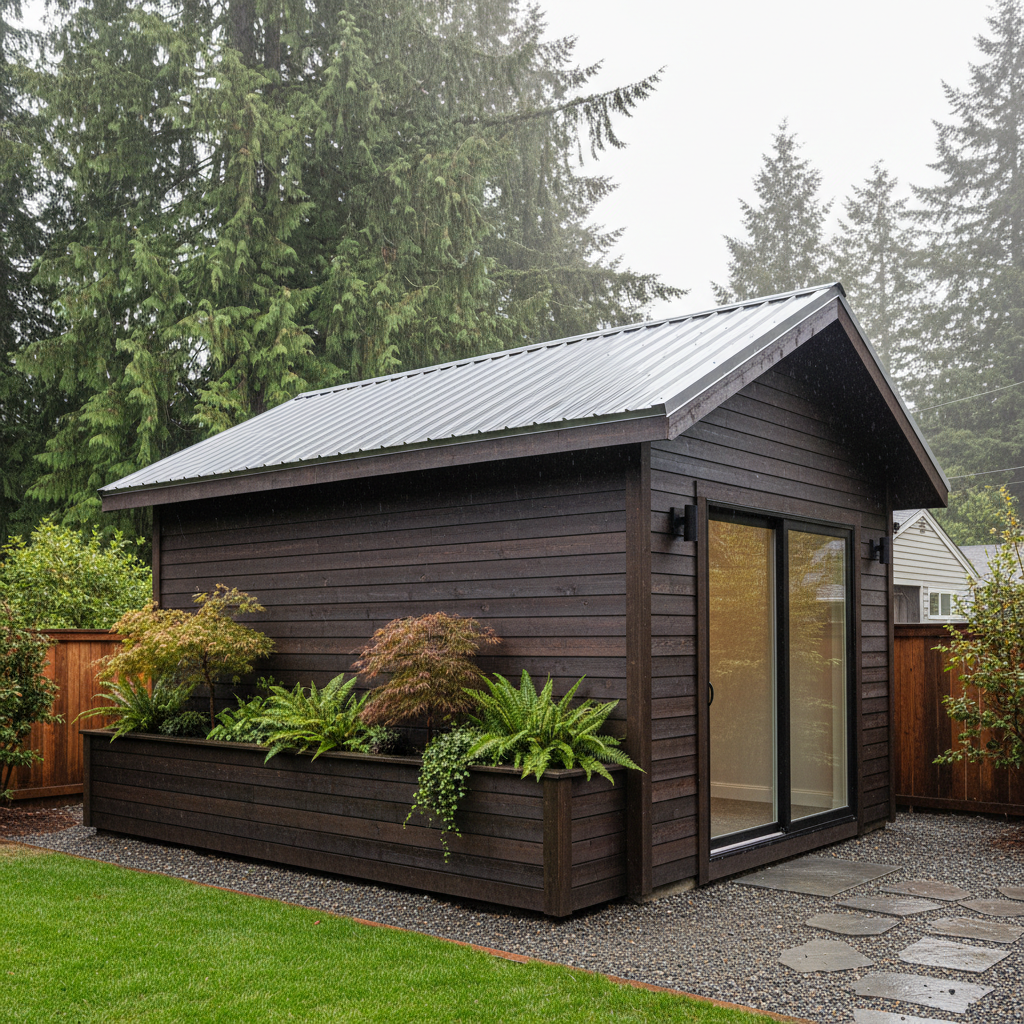
You've got an office shed, maybe you're even working out of one we built here at Seattle Shed Builders. It's a fantastic way to get dedicated workspace without moving or adding on to your main house. But let's be real, we live in Seattle. That means rain, and lots of it. All that moisture is the biggest enemy of any outdoor structure, and your office shed is no exception. So, how do you keep that workspace dry, functional, and looking good for years to come?
Extending the Life of Your Office Shed
The best defense is a good offense, right? When we build sheds, we're thinking about longevity from day one. But once it's yours, it's on you to keep that initial quality from deteriorating. The biggest thing you can do is keep water away from the structure. That means making sure your gutters are clean and draining properly, and that the ground around the shed slopes away from the foundation. If water pools up against the base, you're inviting rot and moisture intrusion. Consider adding a gravel perimeter if you've got a lot of splashback from rain hitting the ground.
Another big one is paint or stain. This isn't just about curb appeal; it's a protective layer. Wood, even treated wood, needs that barrier against the elements. If you've got a painted shed, you'll want to repaint every 5-7 years, maybe sooner if it's on a particularly exposed side. Stained sheds might need re-staining every 3-5 years. Keep an eye out for peeling, cracking, or fading – those are your cues.
Regular Maintenance: Your Checklist
This isn't rocket science, but it does take a little consistency. I tell folks to do a quick walk-around once a season, and then a more thorough check-up twice a year, usually in the spring and fall.
- Clean the gutters: This is non-negotiable in Seattle. Clogged gutters mean water overflowing and running down the side of your shed, getting into places it shouldn't. Do this at least twice a year, more often if you've got a lot of trees nearby.
- Check the roof: Look for loose or missing shingles, especially after a windy storm. Make sure there are no branches scraping against the roof, which can wear down the surface over time. If you have a flat roof, check for standing water or cracks in the membrane.
- Inspect the siding: Look for any cracks, holes, or gaps. Small cracks can be caulked. If you see soft spots, that's a sign of rot and needs addressing quickly. Pay close attention to the trim around windows and doors.
- Windows and Doors: Check the caulking around windows and doors. If it's cracked or missing, re-caulk it. Make sure the weather stripping on doors is intact and creating a good seal. You don't want drafts or, worse, water getting in.
- Ventilation: Make sure any vents are clear of debris. Good airflow helps prevent condensation and mold inside, especially with our damp air.
- Clear vegetation: Keep bushes, trees, and ivy trimmed back from the shed walls and roof. They can hold moisture against the structure, provide pathways for pests, and damage surfaces.
Warning Signs of Problems
Ignoring small issues now can lead to big, expensive problems later. Here's what to watch out for:
- Water stains inside: This is a big red flag. If you see discoloration on the ceiling, walls, or floor, you've got a leak. Find it and fix it immediately.
- Musty odors: A persistent musty smell often indicates mold or mildew growth, which means you have a moisture problem somewhere.
- Soft spots in wood: Use a screwdriver or your finger to gently probe any suspicious-looking wood on the siding, trim, or floor. If it feels soft or crumbles, it's rotting.
- Pest activity: Sawdust piles, chewed wood, or actual pests like ants or mice getting in could mean compromised areas in your shed's exterior. They often exploit existing gaps or moisture-damaged wood.
- Sagging roofline: This is a serious structural issue. Don't ignore it.
When to Call a Professional
Look, not everyone is comfortable on a ladder or knows how to replace a rotten board. That's perfectly fine. If you spot any of the serious warning signs, or if a repair feels beyond your skill set, don't hesitate to call in a pro. Things like significant roof damage, extensive wood rot, or structural concerns are best left to experienced hands. Trying to DIY a major repair incorrectly can often make the problem worse or more expensive to fix down the line.
We're always happy to give advice or come out for a look if you're unsure. Taking care of your office shed isn't just about protecting your investment; it's about maintaining a comfortable, productive workspace, even when the Seattle rain is doing its best to test its limits.