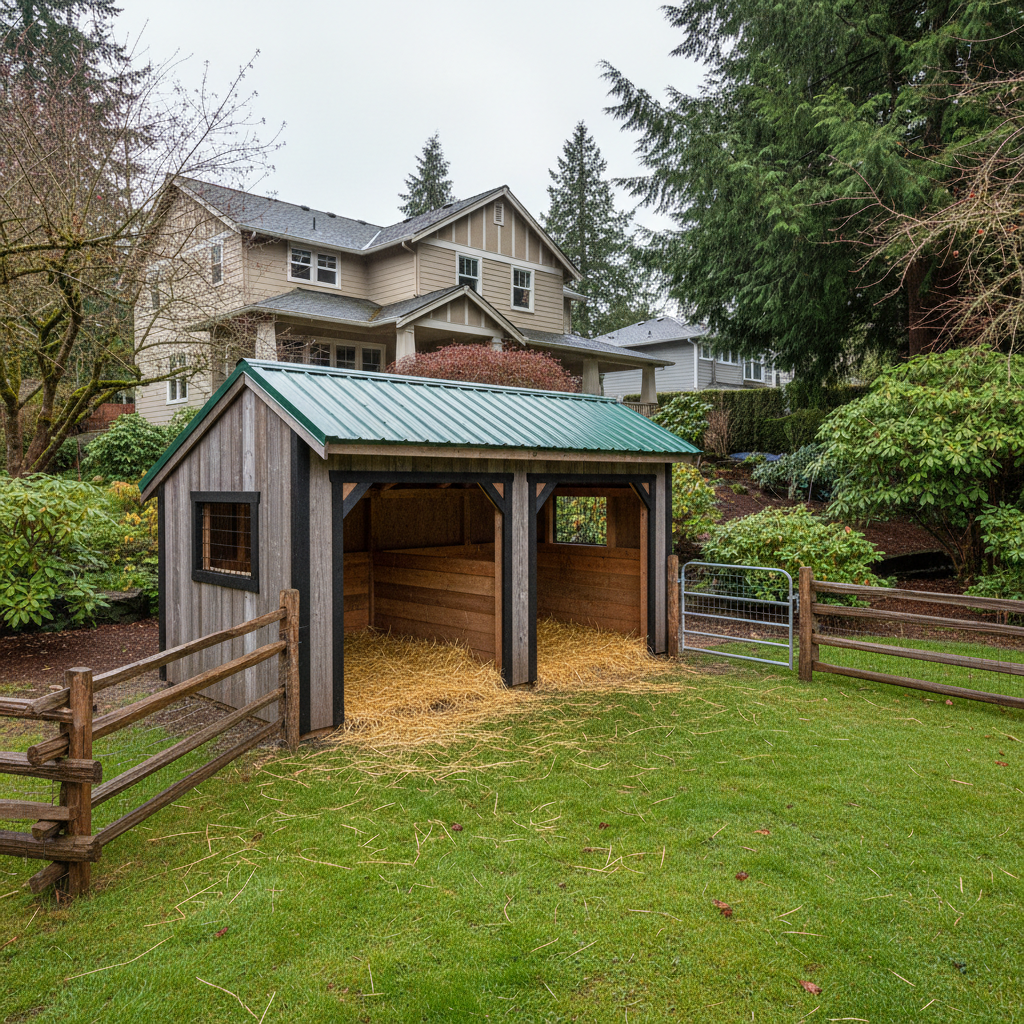
Alright, let's talk about livestock shelters. You'd think it's straightforward, right? A roof, some walls, maybe a door. But I've seen folks around Seattle, from those with a few chickens in Ballard to serious small-scale farmers out past Redmond, make some pretty avoidable blunders when they're trying to get a good home built for their animals. And believe me, a bad shelter project means unhappy animals and an even unhappier you.
Mistake #1: Not Knowing Your Local Rules
This is probably the biggest one, and it's where I see people get tripped up right out of the gate. You can't just throw up a barn or a big coop wherever you want, especially not in King County. There are zoning ordinances, setback requirements, and permits you'll likely need. For example, if you're in a residential zone, there are limits on how many animals you can have and how close their shelter can be to your property line or your neighbor's house. Some areas might have specific rules about waste management, too. I've seen projects halted because someone didn't check with the city or county planning department first. Don't assume. Make the call. It's a quick phone call that can save you thousands in fines or demolition costs.
Mistake #2: Underestimating the Weather
We live in Seattle. We know rain. We know damp. But when it comes to a livestock shelter, people often forget just how much that moisture can impact things. You need proper drainage around the shelter, a good foundation that won't just turn into a mud pit, and excellent ventilation. I'm not just talking about keeping the rain out; I'm talking about managing humidity inside. Poor ventilation leads to respiratory issues for animals, mold, and a generally unhealthy environment. Think about the prevailing winds, too. You don't want your animals constantly exposed to a cold, wet breeze. A good roof overhang, a solid floor that drains well, and adjustable vents are non-negotiable. Don't skimp on the details that keep things dry and airy.
Mistake #3: Going Too Cheap on Materials
Look, I get it. Budgets are real. But trying to save a buck by using flimsy materials for a livestock shelter is a false economy. Animals are tough on structures. They scratch, they peck, they rub, they chew. And then there's the weather, as we just talked about. You need durable, rot-resistant materials. Pressure-treated lumber for anything touching the ground, good quality siding that can handle our wet winters, and a sturdy roof that won't leak after the first big storm. I've seen people use cheap plywood that warps and mildews in a year. You'll end up replacing it sooner, spending more money, and dealing with a headache you could've avoided. Invest in quality upfront; it pays off in longevity and less maintenance.
Mistake #4: Not Planning for Growth (or Shrinkage)
People often build for the number of animals they have *today*. But what if you get more chickens? What if your goats have kids? Or what if you realize you actually need less space? Think about the future. Can the shelter be expanded easily? Can it be reconfigured? It's much easier to build a slightly larger, more versatile structure from the start than to tear down and rebuild later. Also, consider access for cleaning. You'll be mucking out that shelter regularly. Is there enough headroom? Is the door wide enough for a wheelbarrow? Can you easily get bedding in and out? These practical considerations often get overlooked in the excitement of building, but they make a huge difference in day-to-day use.
Mistake #5: Hiring the Wrong Person (or Doing It Yourself When You Shouldn't)
This is where Seattle Shed Builders often comes in. Some folks try to DIY a project that's beyond their skill set, and they end up with something that's not quite right, or worse, unsafe. Others hire the cheapest bid without really vetting the contractor. You need someone who understands animal needs, local building codes, and how to build something that will last in our climate. Ask for references. Look at their past work. Do they have experience with agricultural structures? A general handyman might be great for a fence, but a specialized shelter needs a different kind of expertise. Don't be afraid to ask detailed questions about their approach to ventilation, drainage, and material choices. A good contractor will have solid answers and might even bring up things you hadn't considered.
Building a good home for your animals is a worthwhile investment. Just make sure you're doing it smart. Do your homework, plan for our unique Seattle conditions, and don't cut corners where it counts. Your animals (and your wallet) will thank you for it.